


Two Worlds, One Truth: The Wake-Up Call About Aging and Quality of Life
By Russ Scala, Founder of Scala Precision Health
It was the early 1980s when I had my wake-up call—one that felt like I was seeing into the future.
I had just completed my paramedic training and was responding mostly to non-emergency calls. Nearly 90% of the time, we were assisting elderly individuals—helping them off the toilet, responding to slips and falls, and witnessing something far more difficult: husbands and wives trying to care for each other completely on their own. It was heartbreaking. They had no support. They were struggling every single day—alone.
If you’re reading this, you need to be prepared for that stage of life.
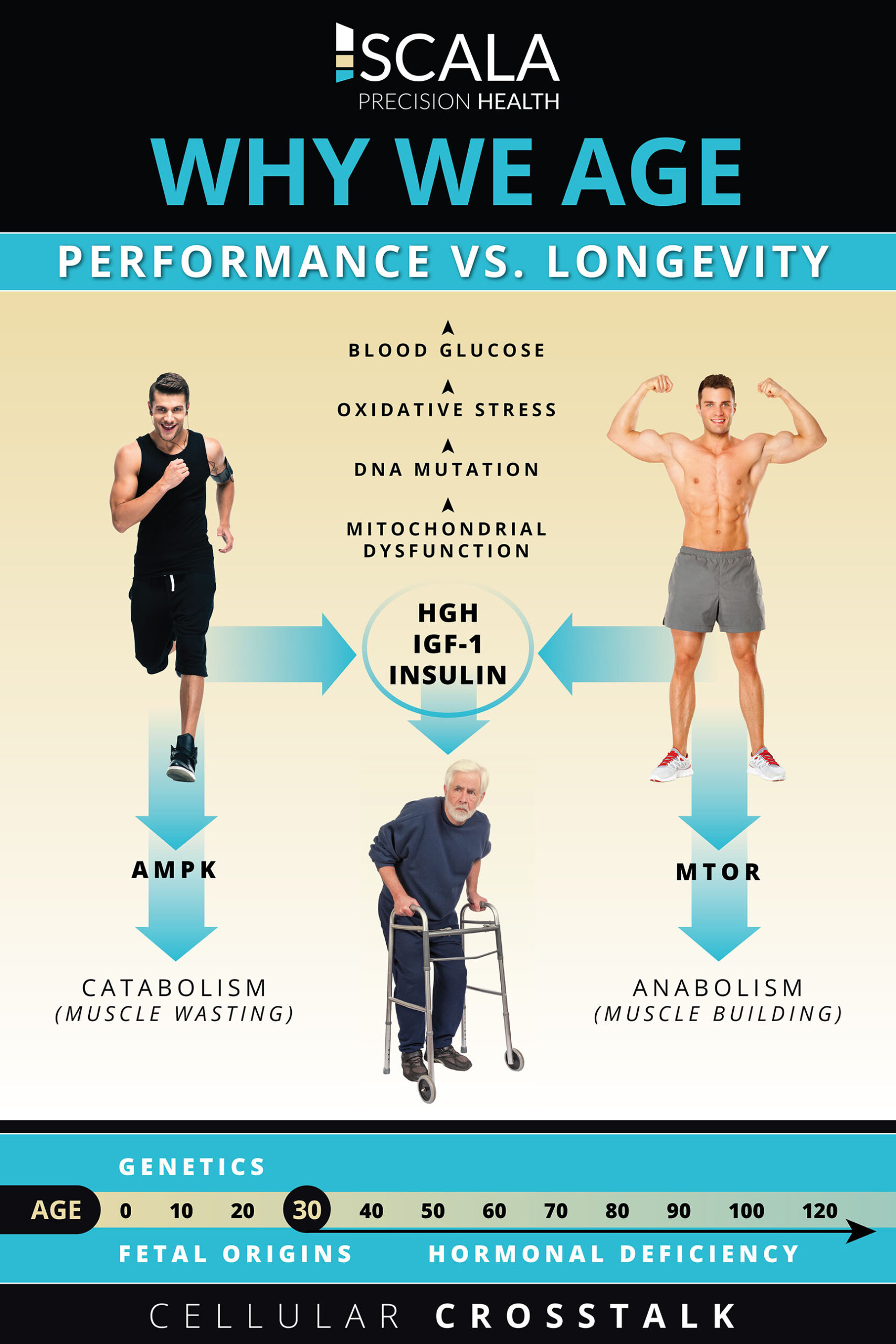
Around that same time, I began training and competing as a triathlete—swimming a mile, biking 25 miles, and running 6 miles, all back-to-back. I loved the challenge. At races across Florida, after crossing the finish line, I would stay to cheer others on.
I was especially drawn to the athletes in their 60s.
When they finished, I would bring them water, introduce myself, and ask questions—about their diet, their training, their sleep, their recovery. The sport was new, and the information they shared fascinated me.
And I kept asking myself:
Why is this 65-year-old crossing the finish line strong… while others the same age are sick, struggling, and unable to perform basic daily tasks in assisted living facilities?
I learned more about quality of life through those conversations than I ever did in any graduate program.
Early in my career, I lived in two worlds:
- As a paramedic, helping elderly patients in decline
- As a triathlete, learning from seniors thriving in strength and vitality
That contrast revealed a hard truth:
Aging, as most people experience it, slowly destroys the body—and there was no clear medical roadmap to fight it.
Years later, I came across a quote from an 81-year-old caregiver that deeply resonated with me. It reflects a reality too many people ignore:
“I am 81 years old. My husband is 85, has had 3 strokes in 2 years and has dementia which is getting worse. I am a full time caregiver. No help. Today started out with washing the wet bedding for the 3rd day this week, shower him, shave him, dress him, fix his breakfast then head to his doctor appointment. That was all by 9 this morning.
The physical therapist came. She informed me Monday would be her last day so I am responsible for getting him to do his exercises twice a week plus get him walking in the pool twice a week.
Then she has the nerve to tell me to make time for myself. WTF? All of this by 12:30pm. Then lunch. And the day just keeps going. I can’t afford to hire a caregiver or put him in a facility. I’ve been working on getting him qualified for medicaid since October. What happens to him if something happens to him? Working kids can’t take care of him.“
That is reality. Let it sink in.
Most people have a financial advisor—but no one is talking about their health future.
There is still no structured, proactive program for people over 60 to maintain mobility, strength, and performance. Instead, many wait until something breaks… and then they’re prescribed multiple medications from different physicians who rarely communicate with each other.
And to all the financial advisors out there—let’s be honest:
What good is $2 million in the bank if your health is gone?
That’s why I developed a program focused on maintaining mobility and performance as we age. Ideally, you start in your 40s. But even if you’re later in life, it’s never too late to take action.
Scala Precision Health is not just another approach—it’s a different way of thinking about aging.
If you’re reading this on your phone or computer, take a moment. Grab a coffee. Search for Russ Scala. Spend 20 minutes exploring.
You’ll enter a completely new world of knowledge—one you likely won’t hear from your physician.
And remember:
We’re always just a phone call away.